
Why glucose matters
Energy, hunger, heart health, diabetes risk — glucose and its impact are a lot to unpack. Lingo streamlines the science throughout your journey. So you not only learn what works, you also learn why.
Why glucose matters
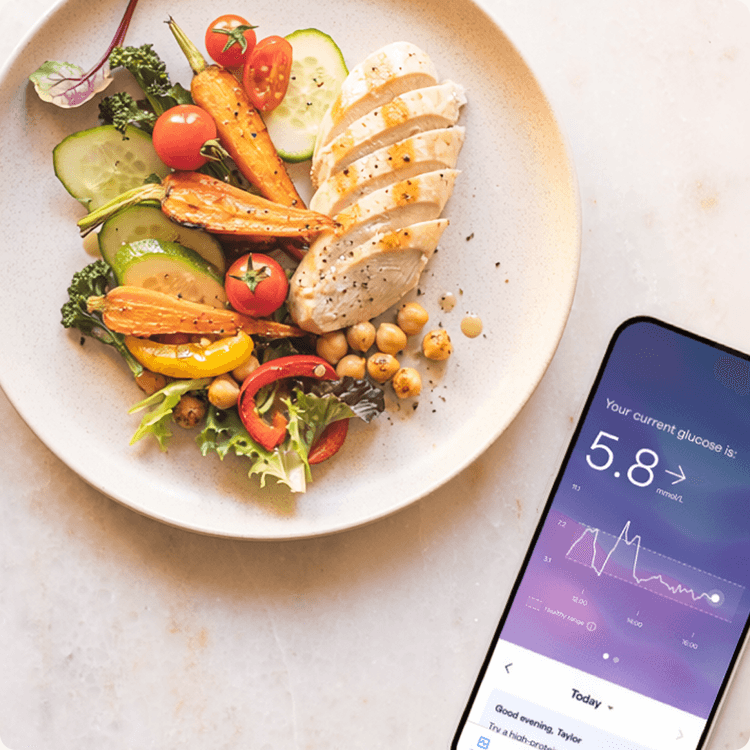
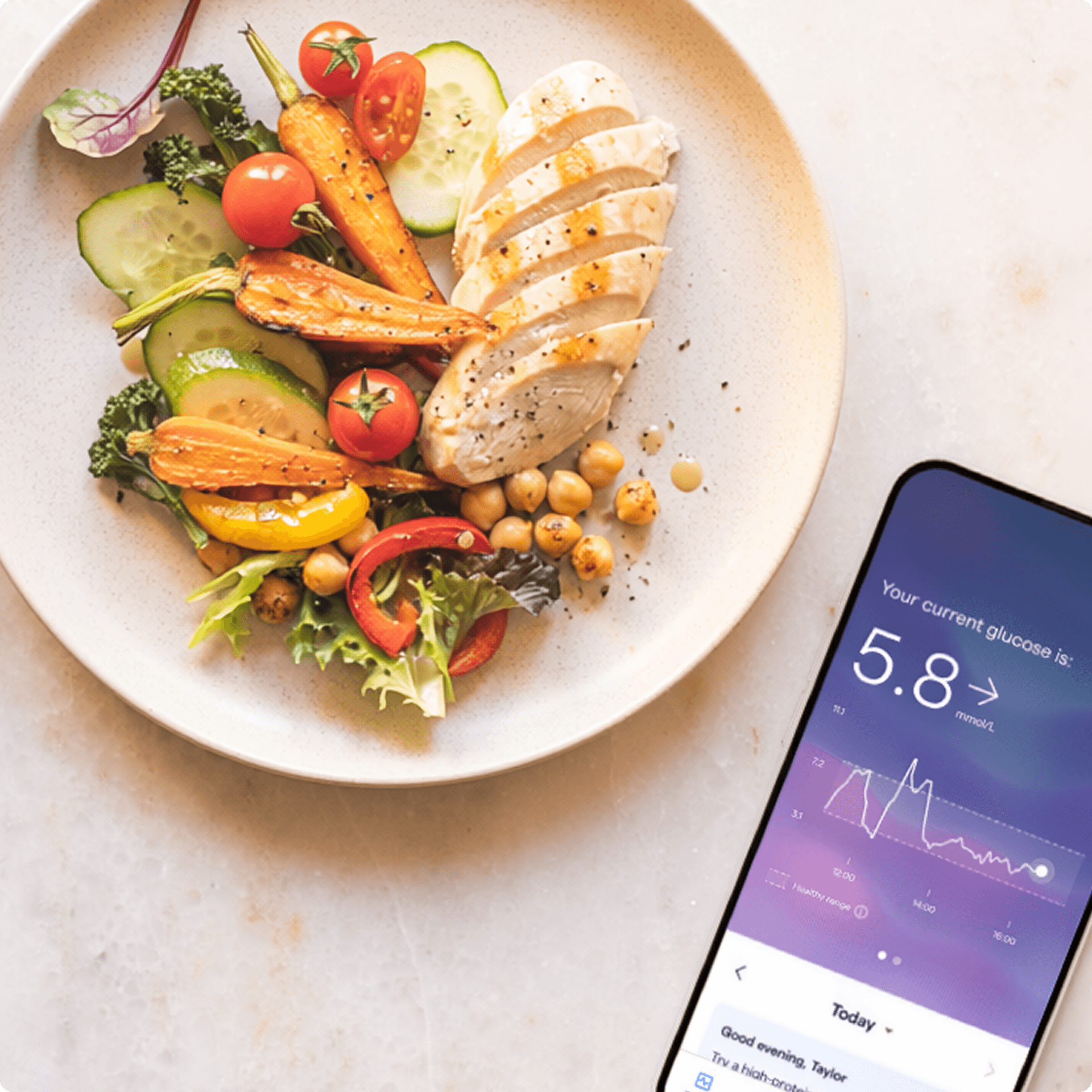
Glucose is a fuel that provides energy to your cells. It goes up and down throughout the day, typically rising after meals with carbs, intense exercise, or even stress. But food tends to be the biggest driver.
As glucose rises (or spikes), your body releases insulin to get that fuel where it needs to go. Insulin helps your body use glucose for energy. When there’s more glucose than needed in your system, the excess glucose gets stored as glycogen or fat for later.1 Frequent and large ups and downs in glucose can affect how you feel day to day.2 And consistently elevated glucose can contribute to long-term disease risk.3,4,5
Fuel better, feel better
Finding foods and habits that work for your routine, and your glucose has all kinds of benefits.
Feel more energised
Notice that 3pm crash? Could be your glucose. Clocking out early. Studies have shown that steady glucose may lead to better sleep,6 giving you the energy to power through the day. In turn, better sleep can also help to keep your glucose steady.7 The cycle is simple. Crash less. Boost energy. Repeat.
Reduce body fat
Diets known to impact your glucose less can help reduce body fat.8,9 Seeing your real-time glucose data can help you build habits that reduce body fat.10
Lower diabetes risk
In the UK, 6.3 million people are at risk of type 2 diabetes. That’s nearly 1 in 10.11 It’s like being stuck in a group chat you didn’t sign up for...and not even getting the notifications. The good news? The less time your glucose goes above healthy range, the lower your risk of diabetes.5
Protect your heart
What you eat matters for your glucose and your heart. Studies show that consistently high glucose levels are linked to higher heart disease risk.3,4,12,13 The TLDR: Keep your glucose in a healthy range. Your heart will thank you.
CGM is a powerful tool
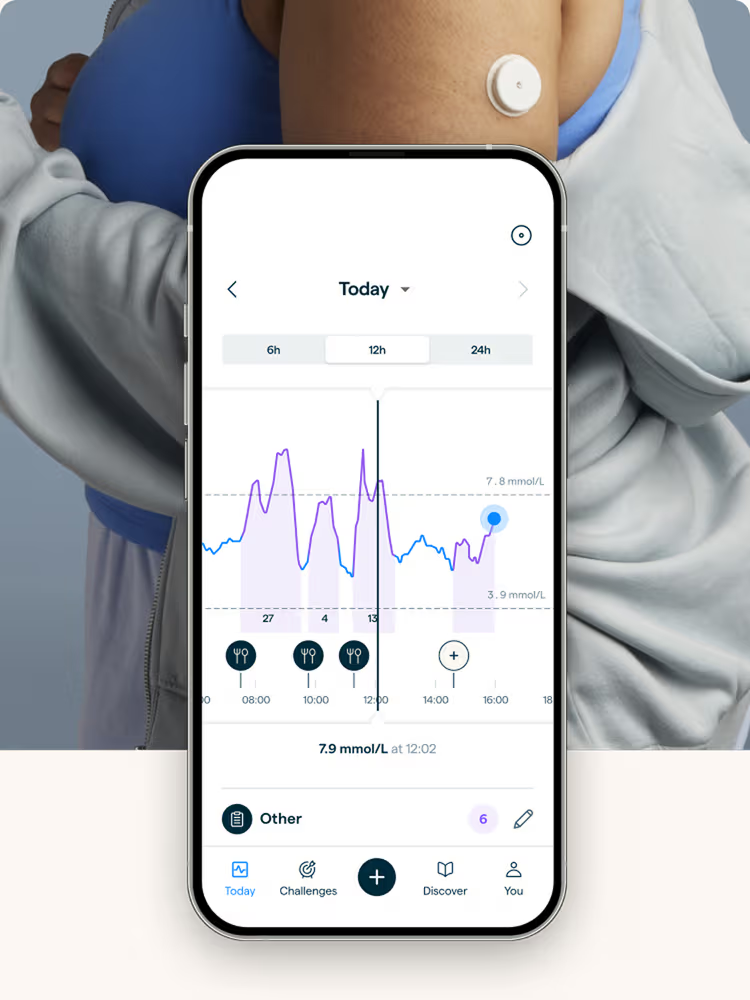
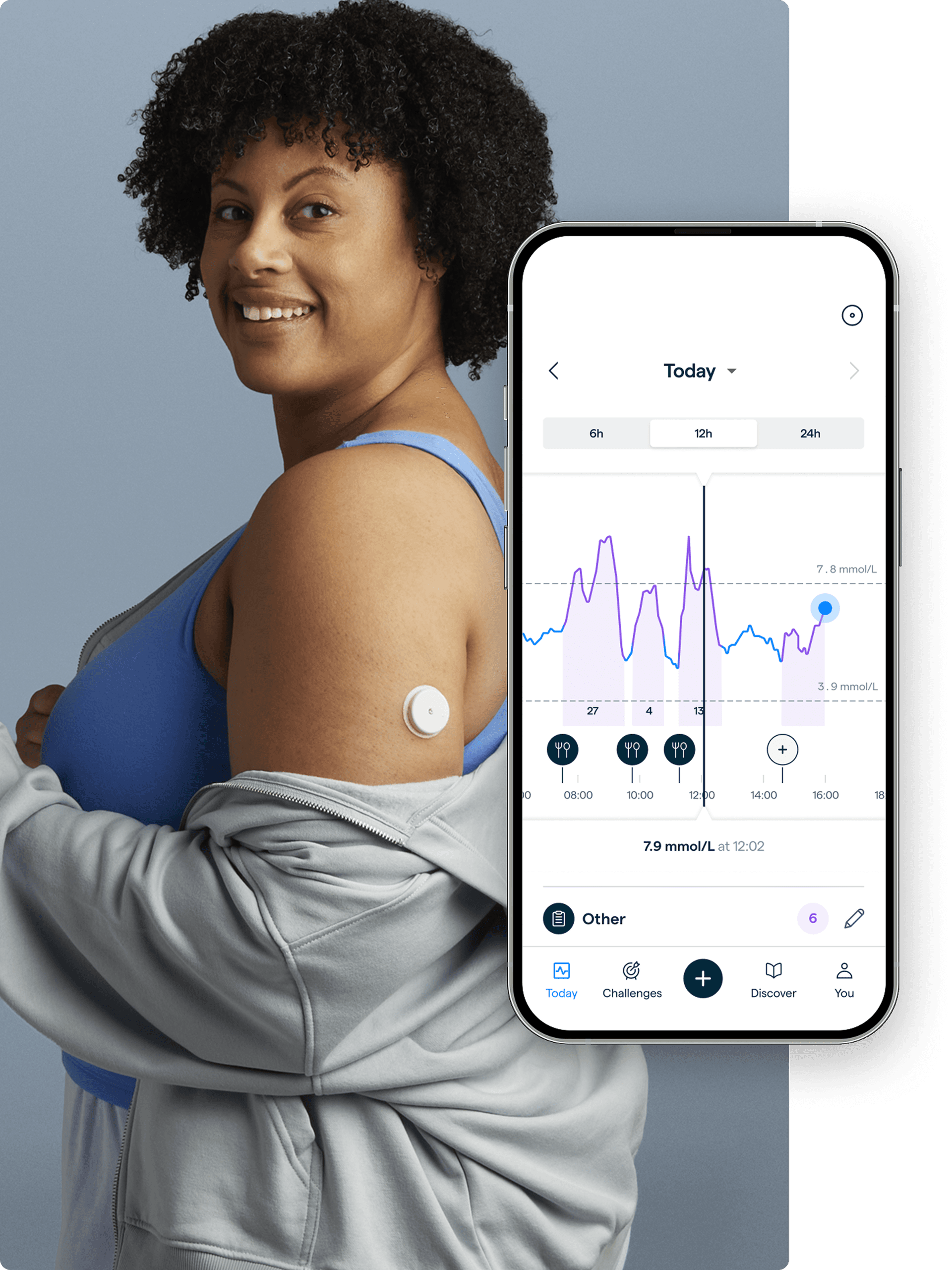
Whatever your health goals, steady glucose matters — and the best way to keep it in check it is to track it. Lingo makes tracking easy. Our biosensor is a continuous glucose monitor (CGM) that streams real-time data to your phone 24/7, showing how food and exercise impact your glucose. Once you see it, you can’t unsee it — and that insight can spark real behavior change.
Real change takes guidance, habit-building, and a smarter approach to fueling your body. The Lingo app turns your glucose data into actionable insights, providing feedback, accountability, and proof that what you’re doing is working.
Research study
In a randomised controlled trial, participants were divided into two groups. Both groups were encouraged to exercise and follow a low-glycaemic index diet. The only difference? One group used a CGM, allowing them to see how their glucose values responded to food and activity throughout the trial. After two months, the CGM group adhered more closely to the low-glycaemic diet. On average, they lost more weight, more body fat, and had improved cholesterol and fasting glucose values10 — all key markers associated with better metabolic health.
Real people, real glucose stories


From sleepless to energetic
Diagnosed with chronic migraines, Jessica spent years searching for answers. A 3am glucose drop helped her discover the missing link. And through Lingo insights, she made small changes that led to better sleep, more energy, and 100+ days off her migraine meds.


From bagel to breakthrough
Ben, a former firefighter and lifelong athlete, thought he had his health figured out — until one bagel made his glucose skyrocket. That moment led to a deeper understanding of his habits, a 25-pound transformation, and a new way to fuel his performance.


Same DNA, different data
Alex and Joey are identical twins, but their lives— and coffee orders — are anything but. Alex is a data-loving product manager, Joey is a creative director with a serious sweet-tooth. They expected their glucose to match, but Lingo told two very different stories. The outcome: smarter fueling and a whole new way to compare notes.

Meet our scientific and clinical advisors
Our advisors, leading experts in medicine and technology, advance what's known of metabolic health and human performance, guide people to better health, and help Lingo build the future of continuous monitoring.














FAQs